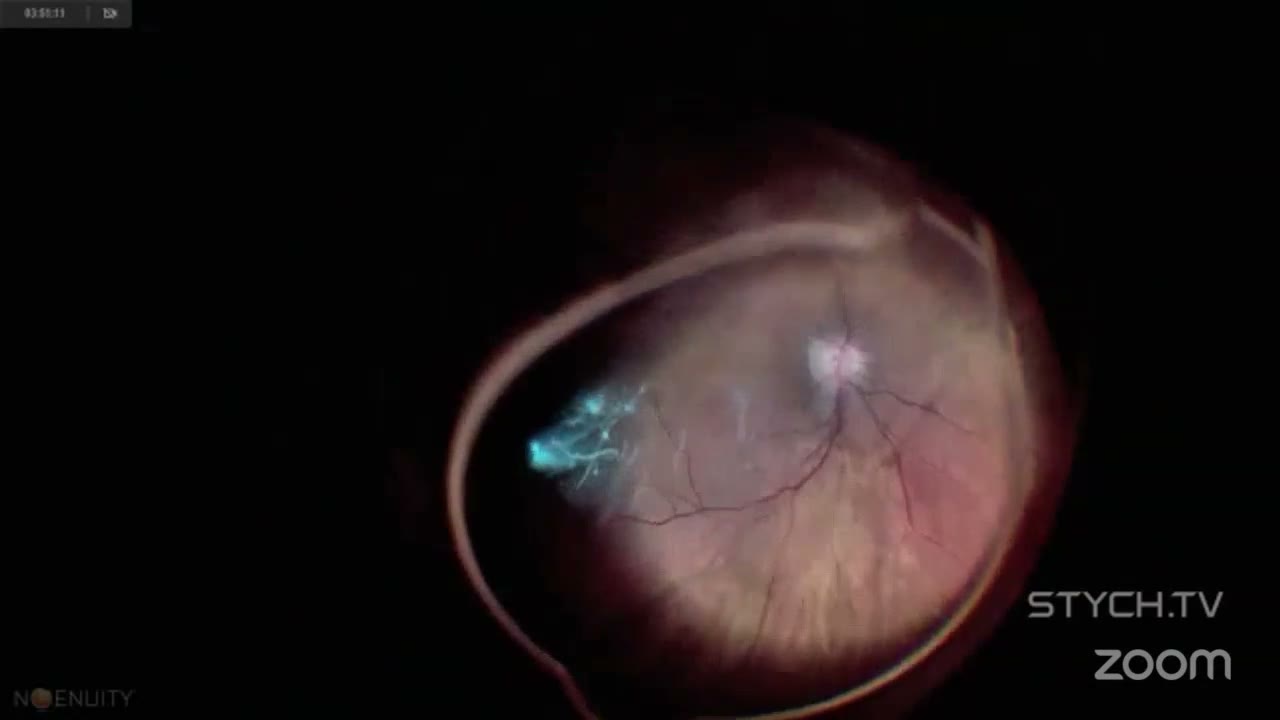
Two treatments exist. They are not equivalent.

We offer both, we describe both honestly, and we give you a clear recommendation. Here is what the published evidence supports, including where it argues against the easier option.

Recommended: Definitive Treatment

Refractive Vitrectomy

Surgery through very small openings, with no stitches, aimed only at the floaters that are actually causing your symptoms. It is usually performed in one surgical session, and one surgery removes most or all of the treated floaters, but no result is guaranteed, and new vitreous changes or recurrent symptoms can occur.[6]

Vitrectomy takes out the gel causing the trouble, and the floaters with it, instead of just rearranging it. It has been the main treatment for floaters that harm vision for decades. Modern stitch-free technique has made it much safer than the operation many patients still picture.[7] Dr. Arroyo uses very fine 27-gauge instruments on the Stellaris Elite system. Smaller instruments mean smaller openings in the eye and a faster recovery.

The "limited" part is deliberate, not a shortcut. The old teaching was to remove every last bit of gel. The evidence says you don't need to: it is enough to remove the floaters causing symptoms, leave the gel just behind the lens in place, and avoid pulling the vitreous off the retina when it hasn't come away on its own.[5] That brings two benefits. Not pulling the gel off the retina lowers the risk of tearing it. And leaving some gel in place slows the cataract that tends to follow a complete vitrectomy.

The word "refractive" describes the goal. This is not surgery to rescue your eye chart score; that is already 20/20. It is surgery to bring back contrast. In that sense it sits alongside procedures like LASIK: the aim is the quality of your vision, not the line on the chart.[5]

−59.6%
Less cloudiness in the vitreous after surgery[5]
+45.7%
Better contrast vision[5]
1 session
Usually one surgical session, removing most or all of the floaters

The risks, stated plainly

No one should agree to eye surgery based on a web page. These are real risks, and we will go through every one of them with you in person:

  • Cataract: expect it, don't gamble on it Dr. Arroyo tells older patients who still have their own lens to expect a cataract after this surgery; it is close to certain over time. It is not a maybe. In a published study of 289 cases, patients had already needed cataract surgery within about three years: 8.1% of those under 50, 40.3% of those aged 50–60, and 45% of those over 60.[5] If you have already had cataract surgery and have a lens implant, this risk does not apply to you, one reason those patients make ideal candidates.
  • Retinal tear and detached retina Dr. Arroyo puts this risk at about 1% when he counsels patients. It is serious, and it is the strongest reason to have floater surgery done by an experienced retina surgeon who is comfortable examining the far edges of the retina. Dr. Arroyo checks the whole outer retina during the procedure. If he finds a tear or a weak spot, he treats it in the same sitting, freezing it closed, rather than leaving it to cause a detached retina later.
  • Infection inside the eye (endophthalmitis) Dr. Arroyo puts this risk at about 1 in 1,000. That is low, but no surgeon and no protocol can bring it to zero. Weigh it honestly against how much your floaters are actually affecting you.
  • Bleeding in the eye, wrinkling of the retina, floaters coming back These happen, but they are uncommon. When floaters come back, it is usually because the vitreous has newly pulled away from the retina since your surgery, not because the surgery failed.[6]
A Legitimate Option: Best For Selected Cases

YAG Laser Vitreolysis

An in-office option that is not surgery. It works well for the right patient and the right floater. Here is what it does, and what it doesn't do, so you can weigh it clearly.

Start with what the laser actually does, because this gets described wrong all the time. The YAG laser breaks floaters apart. It does not burn them away. Nothing leaves your eye. The pieces stay in the vitreous. Whether breaking one large floater into several smaller ones improves your vision is exactly the question, and the answer depends on the patient.

There has been one randomized trial. It compared YAG against a dummy treatment in 52 eyes, and it enrolled only patients with a Weiss ring: a single, well-defined floater sitting in a good spot. In that best-case group, 53% reported real or complete improvement at six months, versus 0% of those given the dummy treatment.[8] That is a genuinely positive result, and it is also the whole of the randomized evidence. Now read the other half of it. Even with the most favorable floater, in a trial designed to show the treatment working, about 47% of patients did not get meaningful relief. And most people with vision-harming floaters do not have a single tidy Weiss ring. They have scattered, cloudy floaters that this trial never tested.

Our own patients, in their own words. In an in-house survey of Boston Vision patients treated with YAG, about 80% said they would recommend it to someone else with floaters. That is higher than the trial above, and it covers a wider range of floaters than that trial included. Here is how to read that number. It is our own experience, not a published study; an informal survey, not a controlled trial, so it cannot be compared head-to-head with the trial above or the 2019 study below. Most of these patients were treated over a few sessions rather than one. We share it because it is what our patients actually tell us, not as a replacement for the published evidence. That is why the rest of this page still leads with the controlled data.

What happened when someone measured it

In 2019, a study in Ophthalmology compared 38 patients who had been treated with YAG against 59 untreated floater patients and 35 people with normal eyes. It used measurements rather than asking patients how they felt.[10] The physical result was real: treated eyes had 23% less cloudiness in the vitreous than untreated eyes. The problem was what happened to vision. There was no meaningful difference between treated and untreated patients in contrast, eye chart score, or quality of life. The laser clearly moved the material. It did not clearly improve the vision.

Here is the detail worth sitting with. Of those 38 treated patients, 25 were still unhappy and went on to have vitrectomy. Only 13 were content to stop. The authors, the same researchers who would later publish results more favorable to YAG, concluded that the treatment "is not a panacea." The patients who stayed unhappy were the ones whose vision was worst to begin with. That is a reminder that the decision should turn on how much the floaters are actually harming your vision, not just on how much material is there.

Where the evidence stands now, in fairness to YAG. That 2019 study looked back at patients already treated, in the real world, with no control over how the laser had been used. Newer work by the same group, with careful patient selection and a standard technique, has reportedly found better results, and the lead author has publicly said he was skeptical beforehand and turned out to be wrong. We think that shift is worth mentioning rather than pretending it doesn't exist. But so far it has only been presented at a conference, not published in a journal. We are not going to quote percentages from numbers that have not been reviewed by other scientists. When that data is published, we will cite it here.

Documented complications

A safety committee of the American Society of Retina Specialists collected the complications that U.S. retina specialists reported after laser treatment for floaters. These are real reported cases, not hypotheticals:[9]

  • Raised pressure inside the eye, leading to glaucoma
  • Cataract, including damage to the lens capsule that then needs cataract surgery
  • Retinal tears and detached retina
  • Bleeding in the retina and permanent blind spots
  • More floaters than before: the very thing the patient came in to fix

Our position: YAG is a real, worthwhile option for the right patient, especially someone with one well-defined floater sitting a safe distance from the retina and the lens, or someone who wants to avoid surgery. It is not the same as vitrectomy, and we will not describe it that way. It has its own list of complications, it takes nothing out of the eye, and the one randomized trial covered a single floater type. Our own patients report being happy with it (see above), even though the best published real-world data found no clear improvement in contrast across the group.[10] For scattered, cloudy floaters it is sometimes a first step rather than the last one. We will go through your particular floaters, what you want, and how you feel about surgery, and help you choose honestly; either one can be the right answer.
What You May Have Read

A third option is being discussed: low-dose atropine drops.

Patients started asking about this in 2025. It is worth understanding, because what the drop does is genuinely different from what the two treatments above do, and the difference is easy to miss in a headline.

Low-dose atropine, at a concentration of 0.01%, is the same drop used for years to slow nearsightedness in children. In 2025 a group of retina specialists published a series describing its use for floater symptoms in adults.[11]

The drop does not treat the floater. It changes how the floater looks. Atropine widens the pupil slightly. A narrow pupil casts a sharp, high-contrast shadow from a floater onto the retina; a wider pupil blurs that shadow and washes it out.[12] Nothing is removed, dissolved, or broken up. The floater is exactly where it was. It simply casts a softer shadow for as long as you keep using the drop.

What the study actually found

Forty-four patients were prescribed the drop once daily. Twenty-two of them used it for at least seven days in a row. Of those twenty-two, thirteen said they were satisfied or very satisfied, and eleven said they would keep using it. Measured against everyone who was handed a prescription, that is thirteen of forty-four, or about 30%.[11] About 18% reported side effects: trouble with near vision, trouble with distance vision, or sensitivity to light.

That study had no comparison group and no dummy treatment, the outcome measured was how satisfied patients said they felt, and it ran for one week. By the standard we apply to the two treatments above, where we cite randomized trials and measured changes in vitreous density and contrast, this is early, preliminary evidence. It is a reasonable signal. It is not proof.

Where we stand

We do not currently offer or prescribe this drop. We are telling you about it because you will read about it, and because the honest version is more useful than the headline. It is not available as a stock prescription in the United States at this concentration; it has to be made up by a compounding pharmacy, and it is used off-label for this purpose. If it turns out to help you, it helps only while you keep taking it, and it does nothing about the floater itself.

One safety point that matters more than the rest. The authors of the study excluded anyone with a posterior vitreous detachment less than three months old, and anyone with narrow drainage angles in the eye. The reason is serious: new floaters and flashes are the warning sign of a retinal tear, and a drop that quiets those symptoms can hide a tear that needs treating within days. Widening the pupil is also the wrong thing to do in an eye at risk of angle-closure glaucoma.[11] Nobody should start this drop without a dilated examination of the peripheral retina first. If your floaters are new, get examined before you treat them.

Side by Side

The comparison, with the numbers attached

Every number below has a source. We would rather you reach your own conclusion from the published data than take our word for it.

Refractive vitrectomy and YAG laser compared, for floaters that harm vision. Scroll sideways to see all columns.
  Refractive Vitrectomy YAG Laser Vitreolysis
What it does Takes the floaters out of the eye Breaks floaters into smaller pieces; nothing comes out
Floaters it can treat Scattered and well-defined floaters alike Good evidence only for one well-defined type, the Weiss ring[8]
Less cloudiness in the eye −59.6%[5] −23% in real-world use[10]
Better contrast vision +45.7%[5] No clear gain compared with untreated patients, in published real-world data[10]
What patients say Dr. Arroyo's patients report being delighted with the removal of their floaters and the clarity of their vision (practice experience; not a formal survey) ~80% would recommend it, in an in-house Boston Vision survey (unpublished; not broken down by number of sessions)
Sessions needed One Often more than one
Strength of evidence Studies that followed patients forward in time and measured results[5][7] One randomized trial, Weiss ring only: 53% improved vs 0% on a dummy treatment, so 47% got no meaningful relief[8]. Published real-world data found no clear benefit to vision across the group[10]. Our own patients report being happy with it (see above)
Main risks Cataract (8.1% under 50; 40.3% at 50–60; 45% over 60)[5]; retinal tear or detached retina (~1%); infection inside the eye (~1 in 1,000); bleeding Raised eye pressure & glaucoma, cataract & lens capsule damage, retinal tear or detached retina, bleeding, blind spots, more floaters[9]
Does it settle the problem? Usually: if floaters return, it is usually a new detachment of the gel, not a failed surgery[6] Sometimes: the pieces stay in the eye, so some patients go on to have surgery
Anesthesia Local injection; in our own surgical suite Numbing drops; at the exam microscope

How to read this table. YAG clears less material than surgery, works on a narrower set of floaters, often takes several sessions, and carries its own list of complications. The best published real-world data found no clear benefit to vision across the group, even though our own patients report being happy with it.[10] Vitrectomy settles the problem more completely, and it is what we recommend for patients who are good candidates and open to surgery. For patients who are not, or who would rather try the gentler option first, YAG is a fair choice, and we will support it.

Why atropine drops are not a column in this table. The drop does not remove or break up floaters, so there is no vitreous density figure and no contrast figure to put in a column next to these. It changes how sharply the floater's shadow falls on the retina, which is a different kind of thing entirely.[11] We cover it in its own section above.

Candidacy

Is this right for you?

Our rules are simple, and we hold ourselves to them. The best candidates are people whose floaters are the problem, and the only problem.

Ideal candidates

Eyes that are healthy apart from the floaters, with or without a cataract, or with a lens implant from past cataract surgery.

A detached gel doesn't decide it

Whether the vitreous gel has already pulled away from your retina does not rule you in or out. We match the surgery to your eye. What drives the decision is how much the floaters are affecting you.

Serious macular disease rules it out

The macula is the center of the retina, where your sharpest vision comes from. If it is badly damaged, by macular degeneration, a hole, or scar tissue, removing floaters cannot bring your vision quality back, and we will not recommend this surgery.

Everything else, case by case

Other eye problems, glaucoma, past surgery, other retinal findings, do not rule you out automatically. We look at each one on its own, and you will get a straight answer either way.

And the answer can be no. If your results don't support surgery, we will tell you not to have it. A careful check protects you from an unnecessary procedure at least as often as it points toward one you need.

Already had, or planning, cataract surgery?

If you already have a lens implant you are pseudophakic, and the risk that dominates this operation for older patients who still have their own lens does not apply to you: there is no natural lens left to cloud, so vitrectomy cannot cause a cataract in that eye. That takes one risk off the list. It does not, by itself, make you a candidate.

Everything else still stands. Retinal tear and detached retina, infection inside the eye, bleeding, macular problems such as swelling or wrinkling of the retina, and the rest of the risks set out above are not changed by having had cataract surgery. You still need an evaluation for vision degrading myodesopsia in its own right: an examination, imaging, and a structured symptom history, the same as anyone else.[14]

Being unhappy after cataract surgery does not, on its own, establish that vitrectomy is the answer. Dissatisfaction after lens surgery can come from dry eye, leftover refractive error, clouding of the capsule behind the implant, glare and halo from the implant itself, macular disease, or floaters, and those are treated in different ways. The decision to operate rests on your symptoms, what the examination finds, how much the floaters are actually affecting what you do, what the alternatives are, and what you choose once you know all of it.

If you are still weighing cataract surgery or a clear lens exchange, the point runs the same way in reverse: decide the lens operation on its own merits, because it is not a floater treatment. How the two operations differ

Common Questions

Treatment, candidacy & logistics

How do you decide whether I'm a candidate?

Two things: your eyes, and how much the floaters affect you. The candidacy section above lists who is a good fit and who isn't. On top of that, we test: wide-angle photographs and an OCT scan of your eye, plus a set list of questions about your symptoms.[3] If the results don't support surgery, we don't recommend surgery.

Should I try the atropine drops before considering surgery?

We do not offer or prescribe them, so this is not a step we can start you on. It is also worth being clear about what the drop is: it widens the pupil a little, which softens the shadow the floater casts, and it does that only while you keep using it.[12] The published series is small and had no comparison group, and roughly 18% of patients had side effects with near vision, distance vision, or light.[11] If you want to try it, ask the doctor who manages your eyes, and get your peripheral retina examined first, particularly if your floaters are new. Full detail is in the atropine section above.

What are the real risks of vitrectomy?

The biggest one is cataract. If you are an older patient who still has your own lens, expect a cataract after this surgery; over time it is close to certain, not a maybe.[5] Dr. Arroyo puts the risk of a retinal tear or detached retina at about 1%, and an infection inside the eye at about 1 in 1,000. Bleeding in the eye is also possible. The risk section above gives the full numbers. No surgeon can bring these risks to zero. Anyone who tells you this surgery is risk-free is selling you something. We would rather you understand the trade-off and decide it is worth it.

Can I watch surgery on stych.tv? What exactly is streamed?

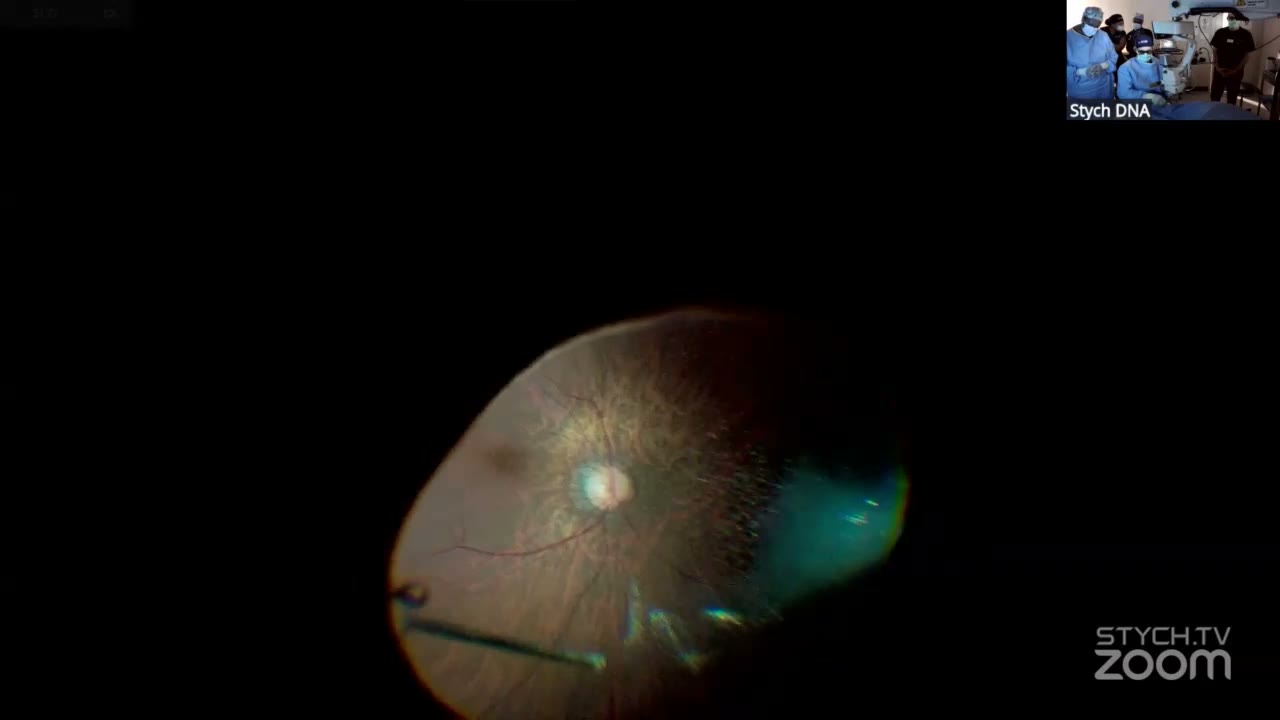
These are two different things, so it is worth being clear. The live streams are for other doctors: members of the Surgical Streaming Society, a worldwide group of surgeons. They watch Dr. Arroyo and his colleagues operate in real time, while he explains what he is doing and why, including when something goes wrong. Being watched by peers is the whole point: it is hard to cut corners when other retina specialists are looking. What patients can watch are short clips of similar surgeries: typical cases, not live, and not your own operation, so you can see the kind of work we do before you decide. Patient names and details are removed from everything, and it is all shared with permission.

I don't live in Massachusetts. Can I still be seen?

Yes; many of our floater patients come from out of state. Start with a video visit. Dr. Arroyo goes over your history, your past records and scans, and whether you are likely to be a candidate, before you travel. Everyone has a complete in-person eye exam before any surgery, and we arrange that around a single trip to Boston.

Sources

References

The sources cited on this page. Numbering matches the complete reference list.

  1. Nguyen JH, Boneva SK, Nguyen-Cuu J, et al. Vitreous Floaters Functional Questionnaire for vision-degrading myodesopsia. JAMA Ophthalmol. 2025;143(11):925-931.
  2. Boneva SK, Nguyen JH, Mamou J, et al. Clinical management of vision degrading myodesopsia from vitreous floaters: observation vs. limited refractive vitrectomy. Ophthalmol Retina. 2025;9(12):1149-1158.
  3. Sebag J, Yee KMP, Nguyen JH, Nguyen-Cuu J. Long-term safety and efficacy of limited vitrectomy for vision degrading vitreopathy resulting from vitreous floaters. Ophthalmol Retina. 2018;2(9):881-887.
  4. Sebag J, Yee KMP, Wa CA, Huang LC, Sadun AA. Vitrectomy for floaters: prospective efficacy analyses and retrospective safety profile. Retina. 2014;34(6):1062-1068.
  5. Shah CP, Heier JS. YAG laser vitreolysis vs sham YAG vitreolysis for symptomatic vitreous floaters: a randomized clinical trial. JAMA Ophthalmol. 2017;135(9):918-923.
  6. Hahn P, Schneider EW, Tabandeh H, Wong RW, Emerson GG; American Society of Retina Specialists Research and Safety in Therapeutics (ASRS ReST) Committee. Reported complications following laser vitreolysis. JAMA Ophthalmol. 2017;135(9):973-976.
  7. Nguyen JH, Nguyen-Cuu J, Yu F, et al. Assessment of vitreous structure and visual function after neodymium:yttrium-aluminum-garnet laser vitreolysis. Ophthalmology. 2019;126(11):1517-1526. 132 subjects (35 controls, 59 untreated floaters, 38 YAG-treated). Treated eyes showed 23% less vitreous echodensity than untreated (p<0.001), but no significant difference in contrast sensitivity (p=0.17), visual acuity (p=0.42), or visual quality of life (p=0.51). 25 of 38 treated patients remained dissatisfied and sought vitrectomy. Authors concluded the treatment "is not a panacea."
  8. Du J, Sabbagh O, Do BK, et al. Low-dose 0.01% atropine eye drops for symptomatic vitreous floaters: a noninvasive, safe, and effective therapeutic option. J Vitreoretin Dis. 2025;9(6):831-835. Retrospective case series, no control group and no placebo. 44 patients were prescribed 0.01% atropine once daily; 22 completed at least 7 consecutive days. Of those 22, 13 (59.1%) were "satisfied" or "very satisfied" and 11 (50%) said they would continue. Measured against all 44 patients prescribed the drop, 13 reported satisfaction (29.5%). About 18.2% reported side effects involving near vision, distance vision, or light sensitivity. The endpoint was one week and the primary outcome was subjective satisfaction.
  9. Harmer SW, Luff AJ, Gini G. Optical scattering from vitreous floaters. Bioelectromagnetics. 2022;43(2):90-105. Computational model of floater optics. Predicts that floaters degrade the contrast sensitivity function, with the greatest degradation between 5 and 40 cycles per degree, and that pupil size strongly modulates symptom severity, with constricted pupils producing a much greater effect than dilated pupils.
  10. American Society of Retina Specialists. Vitrectomy for floaters. ASRS Retina Health Series. Accessed September 16, 2026. https://www.asrs.org/patients/retinal-diseases/28/ Professional society patient education, not a peer-reviewed study. Describes vitrectomy for floaters as surgical removal of the vitreous gel, offered for floaters that interfere with vision, and sets out its own risks and its own decision to operate.